

If you own property in Alberta, British Columbia, or multiple Western Canadian provinces, you’ll need an estate planning legal representative who understands your province’s specific laws. Estate lawyers create legally binding wills, trusts, and powers of attorney that financial advisors can’t draft. They guarantee your documents comply with provincial legislation like Alberta’s Wills and Succession Act or BC’s WESA, navigate probate processes, and handle cross-provincial property complications. Understanding the differences in estate laws, probate costs, and when to update your plan will help you protect your assets and loved ones.
What Estate Lawyers Do That Financial Advisors Can’t
While financial advisors excel at investment strategies and wealth accumulation, estate solicitors possess the legal authority and specialized knowledge to draft binding documents, navigate probate court, and guarantee your estate plan complies with provincial legislation.
Financial advisors can’t create legally enforceable wills, establish trusts, or draft powers of attorney—these require a solicitor’s expertise under Alberta’s Wills and Succession Act or British Columbia’s WESA.
Estate solicitors also understand complex property laws, such as how your BC vacation home remains subject to BC probate fees even if you’re an Alberta resident.
They’ll structure trusts to minimize tax burdens, protect assets from creditors, and guarantee your documents withstand legal challenges.
Without proper legal counsel, you risk creating invalid documents that fail during probate proceedings.
Learn More → Why should I hire an estate planning lawyer?
When do I need a will and estate plan?
Understanding what estate lawyers can do for you naturally leads to a critical question: why should you create an estate plan in the first place?
Without one, your loved ones may face complicated court processes to gain authority over your affairs if you’re incapacitated. You mightn’t receive your preferred end-of-life care, and Alberta or BC courts could distribute your assets according to provincial law rather than your wishes. Your estate may also face excessive taxes, leaving your family uncertain about your intentions.
Creating an estate plan early protects loved ones from legal and financial complications, prevents unnecessary taxes, and allows you to leave a charitable legacy.
It also eliminates family conflicts and confusion. Both Alberta and BC governments recommend having at least a minimal estate plan to avoid these problems.
Do You Need an Estate Lawyer in Alberta or BC?
How do you know if you need professional legal help with your estate? If you own substantial assets, have minor children, or face complex family dynamics, consulting an estate attorney is crucial.
A lawyer guarantees your will complies with Alberta’s Wills and Succession Act or BC’s Wills, Estates and Succession Act, preventing future legal challenges. They’ll help you navigate probate requirements, which differ markedly between provinces, particularly regarding fees.
If you own property in multiple provinces, legal guidance becomes even more critical since each property follows local laws. Attorneys also structure trusts properly, minimize tax burdens, and guarantee your powers of attorney and personal directives are legally valid.
Without professional assistance, you risk creating documents that don’t reflect your wishes or fail to protect your beneficiaries adequately.
The 4 Essential Documents: Wills, Trusts, Powers of Attorney, and Directives
Your estate plan isn’t complete without four fundamental documents working together to protect both your lifetime interests and posthumous wishes. Each serves a distinct purpose in your thorough strategy.
The core documents include:
- Will – Directs asset distribution, appoints an executor, and designates guardians for minor children
- Trust – Holds and manages assets for beneficiaries while providing tax benefits and probate avoidance
- Durable Power of Representative – Authorizes someone to handle financial and legal matters if you become incapacitated
- Personal Directive (Alberta) or Representation Agreement (BC) – Appoints a decision-maker for healthcare and personal choices
- Advanced Directive/Living Will – Documents your specific medical treatment preferences
Together, these documents guarantee you’re protected during incapacity and your wishes are honored after death.
How Alberta and BC Estate Planning Laws Differ
While these documents form the foundation of any estate plan, the legal requirements and implications vary greatly between Alberta and British Columbia.
Alberta’s estate planning is governed by the Wills and Succession Act, while BC operates under the Wills, Estates and Succession Act (WESA).
The most significant differences involve probate fees and obligations to adult children. BC imposes higher probate fees and grants adult children the right to challenge a will if they’re not adequately provided for.
Property location also matters—if you own real estate in BC while residing in Alberta, that property falls under BC law and its associated probate fees.
These provincial distinctions make consulting a lawyer specializing in the appropriate jurisdiction essential for ensuring your estate plan’s validity.
Probate
Probate is the legal process through which a court validates your will, confirms your executor’s authority, and oversees the administration of your estate after death.
This process guarantees your assets are distributed according to your wishes and protects beneficiaries from potential fraud or disputes.
Key aspects of probate include:
- Court validation of your will’s authenticity and legal compliance
- Formal appointment of your executor to act on behalf of your estate
- Asset inventory and valuation of everything you owned at death
- Debt settlement with creditors before distributing remaining assets to beneficiaries
- Final distribution of assets according to your will’s instructions
Probate requirements and fees differ considerably between Alberta and BC, making professional legal guidance essential for effective estate planning.
What Happens During Your First Estate Lawyer Consultation?
Understanding the probate process often leads people to seek professional help, which begins with scheduling a consultation with an estate planning practitioner.
During your first meeting, you’ll discuss your assets, family situation, and goals for distributing your estate. The practitioner will ask about real property, investments, business interests, and beneficiaries you want to include.
You’ll explore essential documents like wills, powers of attorney, and personal directives. The consultation covers potential tax implications, asset protection strategies, and trust options if applicable.
Your practitioner will explain province-specific requirements, particularly if you own property in multiple jurisdictions. This initial session establishes the foundation for creating a thorough estate plan tailored to your circumstances, ensuring your wishes are legally documented and enforceable.
When Life Changes Require Estate Plan Updates
After creating your estate plan during that first consultation, you’ll need to revisit and update your documents when significant life events occur.
Estate planning isn’t a one-time task—it requires ongoing attention as your circumstances evolve. Alberta and BC residents should review their plans every 3-5 years or immediately following major changes.
Life events that necessitate estate plan updates include:
- Marriage, divorce, or entering a common-law relationship
- Birth or adoption of children and grandchildren
- Death of a beneficiary, executor, or power of representative
- Significant changes in assets or financial circumstances
- Relocation to a different province with varying estate laws
Your estate counsel will help you determine which documents need revision and guarantee all changes comply with current provincial legislation.
Provincial Licensing and Credentials: Vetting Your Estate Lawyer
Before entrusting someone with your estate planning needs, you must verify they possess the proper credentials and licensing to practice law in your province. In Alberta, lawyers must be active members of the Law Society of Alberta, while BC practitioners require membership with the Law Society of British Columbia.
You can verify a lawyer’s standing through each society’s public directory, which confirms their authorization to practice and any disciplinary history.
Check whether your lawyer specializes in wills and estates rather than unrelated fields. Experienced estate planning lawyers understand provincial legislation like Alberta’s Wills and Succession Act or BC’s WESA.
They’ll navigate complex issues including tax planning, trust structures, and asset protection. Request information about their years of practice, relevant certifications, and continuing legal education in estate law to verify qualified representation.
How Cross-Provincial Property Ownership Complicates Your Estate
Once you’ve confirmed your lawyer’s credentials and expertise, you’ll need to address another layer of complexity if you own property in multiple provinces.
Real property follows the laws of the province where it’s located, meaning an Albertan owning a BC vacation home faces BC probate fees and succession rules for that asset.
This creates several challenges:
- Each property requires separate probate applications in its respective province
- You’ll pay different probate fees based on each province’s fee structure
- Provincial succession laws may conflict regarding asset distribution
- Estate administration costs multiply with multiple jurisdictions
- Tax implications vary between provinces for property transfers
A lawyer experienced in cross-provincial estates guarantees your documents comply with all relevant jurisdictions, preventing costly delays and legal complications for your beneficiaries.
Estate Planning Costs in Alberta and British Columbia
Understanding the financial investment required for estate planning helps you budget appropriately and avoid surprises when working with legal representatives.
In Alberta and British Columbia, costs vary based on your estate’s complexity and the services you need. Simple wills typically range from $300 to $800, while extensive estate plans including trusts, powers of legal counsel, and personal directives can cost $1,500 to $5,000 or more.
BC’s probate fees differ considerably from Alberta’s, with BC charging approximately 1.4% of the estate’s value over $50,000, while Alberta maintains a flat fee structure with a maximum of $525.
Complex estates involving business succession, multiple properties, or intricate trust arrangements may require ongoing legal consultation, increasing costs but ensuring proper asset protection and tax planning.
Frequently Asked Questions
Can I Write My Own Will Without a Lawyer?
Yes, you can write your own will, but it’s not recommended. Estate planning involves complex legal and tax issues. Working with a lawyer guarantees your will’s valid, addresses potential challenges, and properly reflects your wishes.
How Long Does the Probate Process Typically Take?
The probate process typically takes 6 to 12 months in most cases, though it can extend longer if your estate is complex, disputes arise among beneficiaries, or there are complications with asset valuation or distribution.
What Happens if I Die Without a Will?
If you die without a will, Alberta courts will distribute your assets according to provincial law, not your wishes. Your loved ones may face difficult court processes, excessive taxes, and uncertainty about your intentions while managing your estate.
Are Digital Assets Included in My Estate Plan?
Yes, digital assets should be included in your estate plan. You’ll need to document your online accounts, cryptocurrencies, social media profiles, and digital files, then provide access instructions to your executor for proper management.
Can I Name a Charity as Beneficiary in My Will?
Yes, you can name a charity as a beneficiary in your will. This allows you to leave a charitable legacy through estate donations while supporting causes you care about and potentially reducing taxes on your estate.

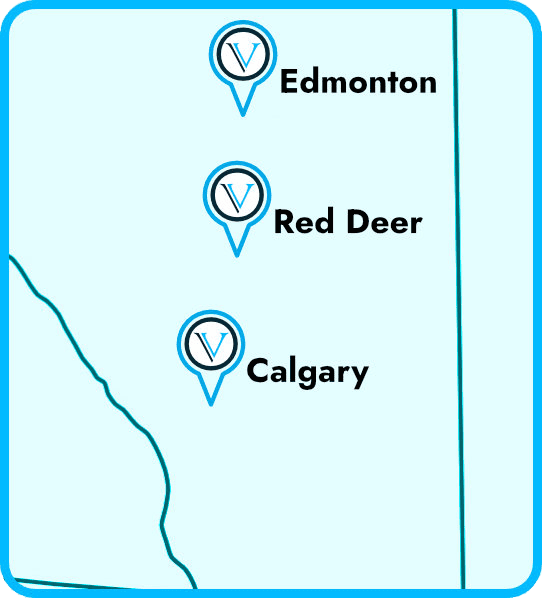
We currently have three offices across Alberta — Edmonton, Calgary, and Red Deer. However, we serve the entire province of Alberta. We also have the infrastructure to work with any of our clients virtually — even the furthest regions of Alberta.
Call us toll-free at 1-877-448-3131 to get routed to the best office for you or contact us online to schedule an appointment.
We also have a dedicated intake form to help you get the ball rolling. Our intake team will review your specific case and advise you on the next steps to take and what to expect moving forward.
Our offices are generally open 8:30 a.m.—5:00 p.m., Mon—Fri.

We serve the entire province of BC. Our experienced paralegals can meet with you in Vancouver and throughout the Lower Mainland, making it easier for you to get the assistance that you need. We also have an interior office in Kamloops. That said, our lawyers have the infrastructure to work with any of our clients virtually — even in the furthest regions of British Columbia.
Call (604) 256-7152 [toll free 1 (877) 415-1484] to get routed to the best representative to serve you or contact us online to schedule an appointment.
We also have a dedicated intake form to help you get the ball rolling. Our intake team will review your specific case and advise you on the next steps to take and what to expect moving forward.
Our offices are generally open 8:30 a.m.—5:00 p.m., Mon—Fri.
Vest Estate Law is dedicated to providing you with practical and innovative advice in estate administration, estate planning, and estate disputes, do not hesitate to reach out and one of our knowledgeable staff will respond promptly to arrange a consultation that meets your needs.

Lauren Eckstein
WILLS and ESTATES LAWYER
Lauren has focused her practice on Wills and Estates, including Adult Guardianship and Trusteeship matters. She offers comprehensive legal services in trust and estate planning, estate administration, and estate litigation.