
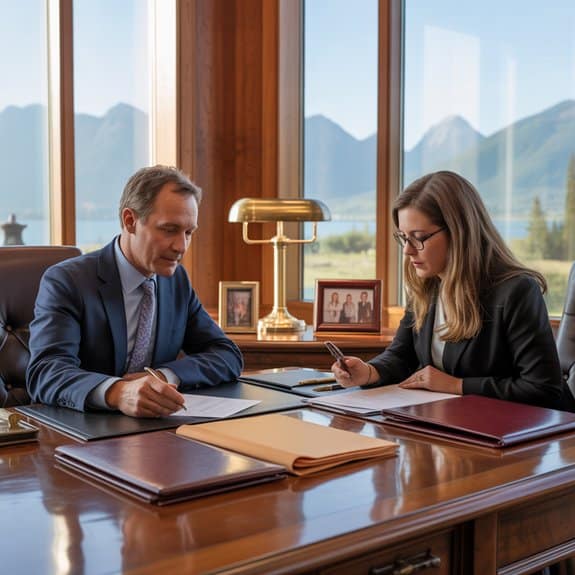
Will lawyers help you write a legally enforceable document that ensures your last wishes are executed, your assets are passed on to the intended beneficiaries, and the needs of dependents are looked after.
There are different ways of doing this and many things to consider beforehand. It is a serious responsibility as your last will and testament is at the heart of your estate plan. Challenges and disputes amongst family members regarding wills are relatively common.
The will experts at Vest Estate Lawyers, serving western Canada, are experienced at working closely with families to prepare wills that protect loved ones and accurately reflect your goals.
You’ll need to understand key provincial differences when planning your will in Alberta or BC, as each province has distinct legal requirements for validity, witness procedures, and who can contest your estate. BC grants adult children broader rights to challenge wills under moral obligation laws, while Alberta restricts challenges primarily to dependent children. Both provinces require proper witnessing, executor selection, and regular updates to reflect life changes like marriage, divorce, or blended family situations. The following sections explain how to navigate these complexities and protect your wishes.
What is a will, and why is it important to have one?
A will is often where people start with their estate plan. This is a legal document that can be used to convey key wishes about what happens to your property and dependent children after your death.
Essentially, your will can achieve three major goals:
- Designate a personal representative (executor/administrator) who will administer your estate and carry out the wishes you express in your will
- Direct how your assets are distributed after your death
- Name a guardian if you have minor children at the time of your death
Your personal representative is responsible for locating assets, paying any outstanding debts, and distributing assets to beneficiaries.
Without a will, your property will be transferred according to (for example) Alberta’s Wills and Succession Act after your death. The courts may be required to intervene, and this can create unnecessary confusion and stress for loved ones.
What Makes a Will Legally Valid in Alberta vs. BC?
Whether you’re drafting a will in Alberta or British Columbia, understanding the legal requirements for validity is essential to confirm your wishes are honoured after death.
Both provinces require formal wills to be in writing, signed by you as the will-maker, and witnessed by two individuals present simultaneously. These witnesses can’t be beneficiaries of your will or their spouses, as this could invalidate bequests.
You must be at least 18 years old and possess mental capacity, meaning you understand your assets and the implications of your decisions.
Alberta uniquely allows holograph wills—entirely handwritten and signed documents requiring no witnesses. BC doesn’t generally recognize holograph wills unless specific exceptions apply.
Consulting an estate lawyer confirms compliance with provincial laws and prevents future challenges.
How to Choose and Protect Your Executor
When selecting an executor for your will, you’re choosing someone who’ll manage your entire estate, pay debts and taxes, distribute assets to beneficiaries, and navigate probate procedures in Alberta or BC.
Choose a trustworthy person with financial knowledge and organizational skills who understands your wishes. Consider naming an alternate executor in case your first choice can’t serve.
A lawyer helps protect your executor by clearly documenting their duties and authority in your will, reducing potential liability.
Proper legal guidance guarantees your executor understands provincial requirements—Alberta’s capped probate fees versus BC’s percentage-based fees affect their responsibilities.
Lawyers can also advise on compensation for executors and help shield them from personal liability when they act in good faith according to your documented instructions.
Can Adult Children Challenge Your Will? BC vs. Alberta Rules
How easily can adult children challenge your will after you’re gone?
In BC, adult children have broader rights to contest your will under the Wills, Estates and Succession Act. BC courts recognize a moral obligation to adequately provide for adult independent children, meaning they can successfully claim against your estate even if financially self-sufficient.
Alberta’s rules are more restrictive. Under the Wills and Succession Act, adult children generally can’t challenge your will once they’re independent and over 18, unless they’re legal dependents requiring support.
BC’s higher likelihood of successful variation claims means you’ll need more careful planning if you’re excluding or limiting inheritances for adult children.
Working with an estate lawyer helps you understand these provincial differences and structure your will accordingly.
Why DIY Wills Often Fail in Estate Planning
While online templates and DIY will kits seem like cost-effective solutions, they frequently create more problems than they solve in estate planning.
These documents often fail to meet provincial legal requirements, leading to invalidation and unintended intestacy. Common pitfalls include:
- Improper witnessing procedures that don’t comply with Alberta or BC requirements, rendering the will legally invalid.
- Incomplete asset coverage, particularly with digital assets, cryptocurrencies, or cross-provincial property, requires specific legal language.
- Ambiguous wording that triggers family disputes and costly litigation, defeating the purpose of saving legal fees.
BC’s broader moral obligations and Alberta’s specific witnessing rules make DIY approaches particularly risky.
A lawyer guarantees your will is legally binding, tax-efficient, and properly executed across jurisdictions.
Who Should Make Decisions if You Can’t? POA Explained
Beyond drafting a will to protect your wishes after death, you need legal documents that empower trusted individuals to act on your behalf if illness or injury leaves you unable to make decisions.
In Alberta, an Enduring Power of Representative (Attorney) handles financial matters and continues after you lose capacity, while a Personal Directive covers healthcare decisions.
British Columbia uses an Enduring Power of Representative for finances and a Representation Agreement for health and personal matters.
Both provinces require you to be mentally capable when signing these documents.
You’ll choose separate representatives for financial and healthcare decisions—these can be family members or trusted friends, not necessarily lawyers.
Working with an estate lawyer guarantees your documents comply with provincial requirements and protects your interests during incapacity.
How to Handle Assets in Both Alberta and BC
Owning property, investments, or other assets in both Alberta and British Columbia creates distinct legal challenges that require careful estate planning across two jurisdictions.
Your will must comply with the laws of both provinces to guarantee smooth asset distribution and avoid potential conflicts during probate.
Consider these essential steps:
- Consult an estate lawyer familiar with both provincial laws to draft a thorough will that addresses cross-jurisdictional requirements and potential legal conflicts.
- Identify which assets fall under each province’s jurisdiction, as real estate is governed by the province where it’s located, while movable assets follow different rules.
- Review your will regularly when acquiring or selling assets in either province to maintain legal compliance and reflect current holdings.
Provincial differences in probate fees, will variation claims, and moral obligations make professional legal guidance essential.
What Blended Families Need to Know About Will Planning
Blended families face unique challenges in will planning that demand careful attention to verify all family members receive fair consideration and potential disputes are minimized.
You’ll need to clearly define how assets will be distributed among biological children, stepchildren, and your current spouse. Without proper legal documentation, provincial intestacy laws may not reflect your wishes, potentially excluding stepchildren who aren’t legally adopted.
Both Alberta and BC require careful planning for blended families, though BC’s broader moral obligations to adult children can complicate matters further.
You should work with an estate lawyer to create trusts, specify guardianship arrangements for minor children, and establish clear terms that prevent conflicts between your spouse and children from previous relationships.
Regular updates verify your will reflects changing family dynamics.
How to Appoint Guardians and Set Up Trusts for Minors
When you have minor children, appointing a legal guardian in your will stands as one of your most critical decisions, as this person will assume full parental responsibilities if you and the other parent pass away or become incapacitated.
You should choose someone who shares your values, parenting philosophy, and has the capacity to care for your children long-term.
Setting up trusts for minors protects inherited assets until they reach maturity.
Consider these trust options:
- Testamentary trusts established through your will, allowing trustees to manage funds for education, healthcare, and living expenses
- Age-based distribution schedules that release assets gradually at specific milestones (e.g., 25, 30, 35)
- Special needs trusts are designed for children with disabilities without affecting government benefit eligibility
A lawyer guarantees that guardian appointments and trust structures comply with Alberta or BC laws.
Problems to Avoid in Estate Planning
Even with the best intentions, estate planning mistakes can undermine your wishes and create significant hardships for your loved ones after you’re gone.
One common error is complacency—failing to update your will after major life events like marriages, births, or deaths can render it outdated and ineffective.
Another pitfall is overlooking digital assets such as cryptocurrency, online accounts, and digital photos, which require specific provisions.
Ambiguous language in your will can spark disputes and costly legal battles among beneficiaries.
While DIY wills and online templates seem cost-effective, they often lack the precision needed to comply with Alberta’s and BC’s complex estate laws.
Working with an experienced lawyer guarantees your estate plan is clear, thorough, and legally sound.
When Should You Update Your Will and Estate Plan?
Life changes constantly, and your will and estate plan must evolve alongside it to remain effective and legally sound.
Regular reviews guarantee your documents reflect current wishes and comply with provincial laws in Alberta and BC.
Update your will after these major life events:
- Family changes — Marriage, divorce, birth of children, adoption, or death of a beneficiary or executor requires immediate revisions to prevent unintended consequences.
- Financial shifts — Acquiring substantial assets, purchasing property in another province, receiving an inheritance, or significant debt changes necessitate updates to asset distribution strategies.
- Legal updates — Provincial law amendments may affect will validity, beneficiary rights, or tax implications, particularly differences between Alberta and BC regulations.
Consult an estate lawyer every three to five years, even without major changes, to maintain compliance and effectiveness.
How a Lawyer Prevents Family Disputes Over Your Estate
Family conflicts over inheritance can tear apart relationships and drain estates through lengthy legal battles, but a lawyer’s expertise prevents most disputes before they arise. A lawyer clearly documents your wishes in legally binding language that reduces ambiguity and misinterpretation.
They’ll help you navigate complex situations like blended families, unequal distributions, or excluding relatives—choices that often trigger conflicts without proper legal framing. Your lawyer can mediate family discussions during planning, addressing concerns before tensions escalate.
They’ll guarantee your executor understands their duties and has legal protection against challenges. In BC, where adult children can claim moral obligations to your estate, legal guidance is essential to structure your will defensively.
Proper documentation, witness protocols, and compliance with provincial laws create a stronger will that’s harder to contest, protecting both your legacy and family harmony.
Is a Power of Attorney (POA) made in Alberta valid in British Columbia?
What happens when you relocate from Alberta to British Columbia with an existing Power of Attorney? Under Section 38 of the BC Power of Attorney Act, your Alberta POA can be recognized in BC if specific requirements are met.
For your Alberta POA to be valid in British Columbia, you’ll need:
- Certificate of Extra-Jurisdictional Counsel – An Alberta lawyer must complete this certificate confirming your POA was validly made under Alberta law and remains effective there.
- Enduring authority confirmation – The certificate must verify that your POA continues while you’re incapable of managing financial affairs or comes into effect upon incapacity.
- Residency verification – Documentation proving you were ordinarily resident in Alberta when the POA was created.
Consulting a BC estate lawyer guarantees compliance with provincial regulations.
How Vest Estate Law Can Help
Steering through the complexities of wills, estates, and powers of legal representatives across Alberta and British Columbia requires specialized legal expertise that understands both provincial frameworks.
Vest Estate Law focuses exclusively on wills and estates law across both provinces, providing tailored solutions for your unique circumstances. Whether you’re drafting a will, establishing powers of legal representatives, or managing cross-jurisdictional assets, our team guarantees your documents comply with current provincial laws and reflect your wishes accurately.
We handle complex situations including blended families, significant assets, and tax-efficient estate planning strategies.
If disputes arise, we excel at estate litigation to protect your interests. Our legal professionals guide you through every step, from initial planning to executor support, guaranteeing legal validity and minimizing family conflicts.
Work with a firm dedicated to estate law—work with Vest.
Frequently Asked Questions
What Happens to My Digital Assets Like Cryptocurrency in My Will?
You’ll need to specifically list your cryptocurrency and digital assets in your will, including access information and instructions. A lawyer can help guarantee they’re properly documented and legally transferred to your chosen beneficiaries under provincial laws.
How Much Do Probate Fees Cost in Alberta Versus BC?
Alberta’s probate fees are capped at $525 regardless of estate value, while BC charges approximately 1.4% based on your estate’s total value. You’ll pay considerably less in Alberta for larger estates.
Can I Name a Charity as a Beneficiary in My Will?
Yes, you can name a charity as a beneficiary in your will in both Alberta and BC. This allows you to leave a lasting legacy while potentially reducing estate taxes for your remaining heirs.
What Is a Holograph Will and Is It Valid in BC?
A holograph will is entirely handwritten and signed by you without witnesses. It’s valid in Alberta but not recognized in BC, where you’ll need a formal witnessed will to guarantee legal validity.
Do I Need Separate Wills for Assets in Alberta and BC?
You don’t necessarily need separate wills, but your single will must comply with both provinces’ laws. It’s crucial to consult an estate lawyer to guarantee your will properly addresses assets in both jurisdictions.

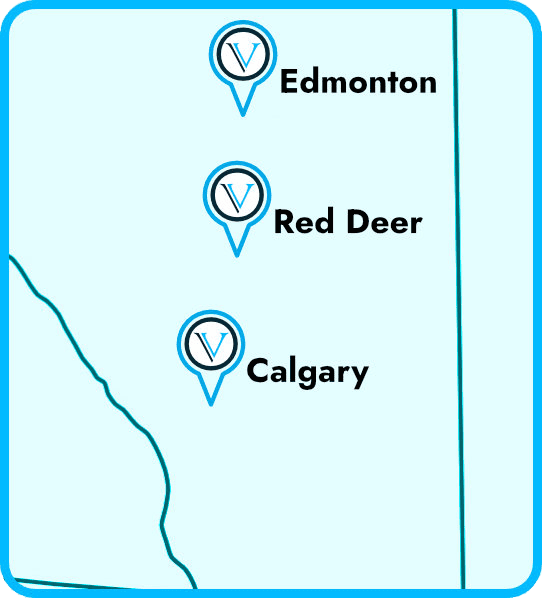
We currently have three offices across Alberta — Edmonton, Calgary, and Red Deer. However, we serve the entire province of Alberta. We also have the infrastructure to work with any of our clients virtually — even the furthest regions of Alberta.
Call us toll-free at 1-877-448-3131 to get routed to the best office for you or contact us online to schedule an appointment.
We also have a dedicated intake form to help you get the ball rolling. Our intake team will review your specific case and advise you on the next steps to take and what to expect moving forward.
Our offices are generally open 8:30 a.m.—5:00 p.m., Mon—Fri.

We serve the entire province of BC. Our experienced paralegals can meet with you in Vancouver and throughout the Lower Mainland, making it easier for you to get the assistance that you need. We also have an interior office in Kamloops. That said, our lawyers have the infrastructure to work with any of our clients virtually — even in the furthest regions of British Columbia.
Call (604) 256-7152 [toll free 1 (877) 415-1484] to get routed to the best representative to serve you or contact us online to schedule an appointment.
We also have a dedicated intake form to help you get the ball rolling. Our intake team will review your specific case and advise you on the next steps to take and what to expect moving forward.
Our offices are generally open 8:30 a.m.—5:00 p.m., Mon—Fri.
Vest Estate Law is dedicated to providing you with practical and innovative advice in estate administration, estate planning, and estate disputes, do not hesitate to reach out and one of our knowledgeable staff will respond promptly to arrange a consultation that meets your needs.

Kelly Sullivan
WILLS and ESTATES PARALEGAL
Kelly is a highly accomplished Paralegal with an impressive 28-year tenure in the legal industry, specializing in estate administration and estate planning at Vest Estate Law. Her extensive experience and profound knowledge have established her as an invaluable asset to the firm and a trusted advisor to clients.